The final chapter of the unit! First we see how insulators respond to an electric field — from simple polarisation to the remarkable ferro-, pyro- and piezoelectric effects. Then we meet liquid crystals: strange materials that flow like liquids yet stay ordered like crystals, and run the display on your watch.
What is polarisation? When a dielectric (insulator) is placed in an electric field, its positive and negative charges shift slightly in opposite directions. The material develops tiny dipoles — this is polarisation. There are four mechanisms, and they differ in speed: fast ones can follow a rapidly alternating field, slow ones cannot.
Fastest — follows even optical frequencies (~1015 Hz)
Ionic polarisation
Cations and anions shift in opposite directions
Ionic crystals (e.g. NaCl)
Fast — follows up to infrared frequencies (~1013 Hz)
Orientational (dipolar) polarisation
Permanent dipoles rotate to line up with the field
Polar substances (e.g. H2O)
Slow — follows only up to radio/microwave frequencies; weakens on heating
Interfacial (space-charge) polarisation
Charges pile up at grain boundaries and interfaces
Heterogeneous materials, ceramics
Slowest — only at low frequencies
Memory trick: read the speeds as E > I > O > S — Electronic is fastest, then Ionic, then Orientational, then Space-charge is slowest. Examiners often ask "which polarisation operates at optical frequencies?" — answer: only electronic, because the heavier mechanisms cannot keep up.
Dielectric constant (relative permittivity): εr = C / C0 · the ratio of the capacitance of a capacitor with the material (C) to that without it — in vacuum (C0). It has no units and measures how well the material stores electrical energy.
Some crystals show spontaneous electric behaviour — no external field needed. Learn these four as one comparison table; the examiner almost always asks them together.
Property
What it means (in simple words)
Key feature
Examples
Ferroelectricity
The crystal has a spontaneous polarisation that can be reversed by applying an electric field
Shows a P–E hysteresis loop (like the magnetic one); polarisation disappears above the Curie temperature
BaTiO3 (Tc ≈ 393 K), KH2PO4 (KDP)
Antiferroelectricity
Neighbouring dipoles point in opposite directions, so the net polarisation is zero
No spontaneous polarisation, but a strong field can force the dipoles parallel (double hysteresis loop)
PbZrO3
Pyroelectricity
The spontaneous polarisation changes with temperature — heating or cooling produces surface charges
Works as a heat sensor; every pyroelectric crystal lacks a centre of symmetry
Tourmaline (the classic example)
Piezoelectricity
Squeezing the crystal produces electric charge (direct effect); applying voltage deforms it (converse effect)
Mechanical energy ↔ electrical energy, both ways
Quartz (the classic example)
Ferroelectric Hysteresis Loop
Spontaneous polarisation Ps, remanent polarisation Pr and coercive field Ec — the basis of ferroelectric memory.
How they are related (very important): every ferroelectric crystal is also pyroelectric, and every pyroelectric crystal is also piezoelectric — but not the other way round. Think of three nesting boxes: piezoelectric (biggest) ⊃ pyroelectric ⊃ ferroelectric (smallest).
Applications of piezoelectricity:
Gas lighters — pressing the crystal gives a spark.
Ultrasound scanners and sonars — converse effect makes vibrations.
Pressure sensors, microphones and quartz watches.
Exam tip: The most repeated question here is "Distinguish between ferroelectricity, pyroelectricity and piezoelectricity." Write the three definitions, draw the P–E hysteresis loop for the ferroelectric, and add the nesting-box line above — that is a complete 5-mark answer.
🧪
Liquid Crystals
Definition. A liquid crystal is a state of matter between a crystalline solid and an ordinary liquid — called the mesophase. Like a liquid it flows, but like a crystal its molecules keep some order (at least in their orientation). Discovered by Reinitzer in 1888 in cholesteryl benzoate.
Crystalline solid: full positional + orientational order (molecules fixed in a lattice).
Liquid crystal (mesophase): partial order — flows, but molecules stay aligned.
Isotropic liquid: no order at all.
The three phases:
Liquid-Crystal Phases
Nematic: parallel but positionally random · Smectic: neat layers · Cholesteric: direction twists layer by layer.
Phase
Molecular arrangement
In simple words
Example
Nematic
Orientational order only — rod-like molecules point the same way, but their positions are random
Like a school of fish swimming in one direction
MBBA
Smectic
Layered arrangement plus orientational order — molecules sit in planes that slide over each other
Like a stack of soapy sheets
Soap-like substances
Cholesteric
Nematic-like, but the direction of alignment twists into a helix from layer to layer
Like a spiral staircase of molecules
Cholesterol esters (e.g. cholesteryl benzoate)
Order parameter: S = ½⟨3cos²θ − 1⟩ · θ is the angle between a molecule and the average direction. S = 1 means perfect alignment, S = 0 means complete disorder. On heating through the mesophase, S falls and drops to zero at the clearing point.
Structure–property link & applications:
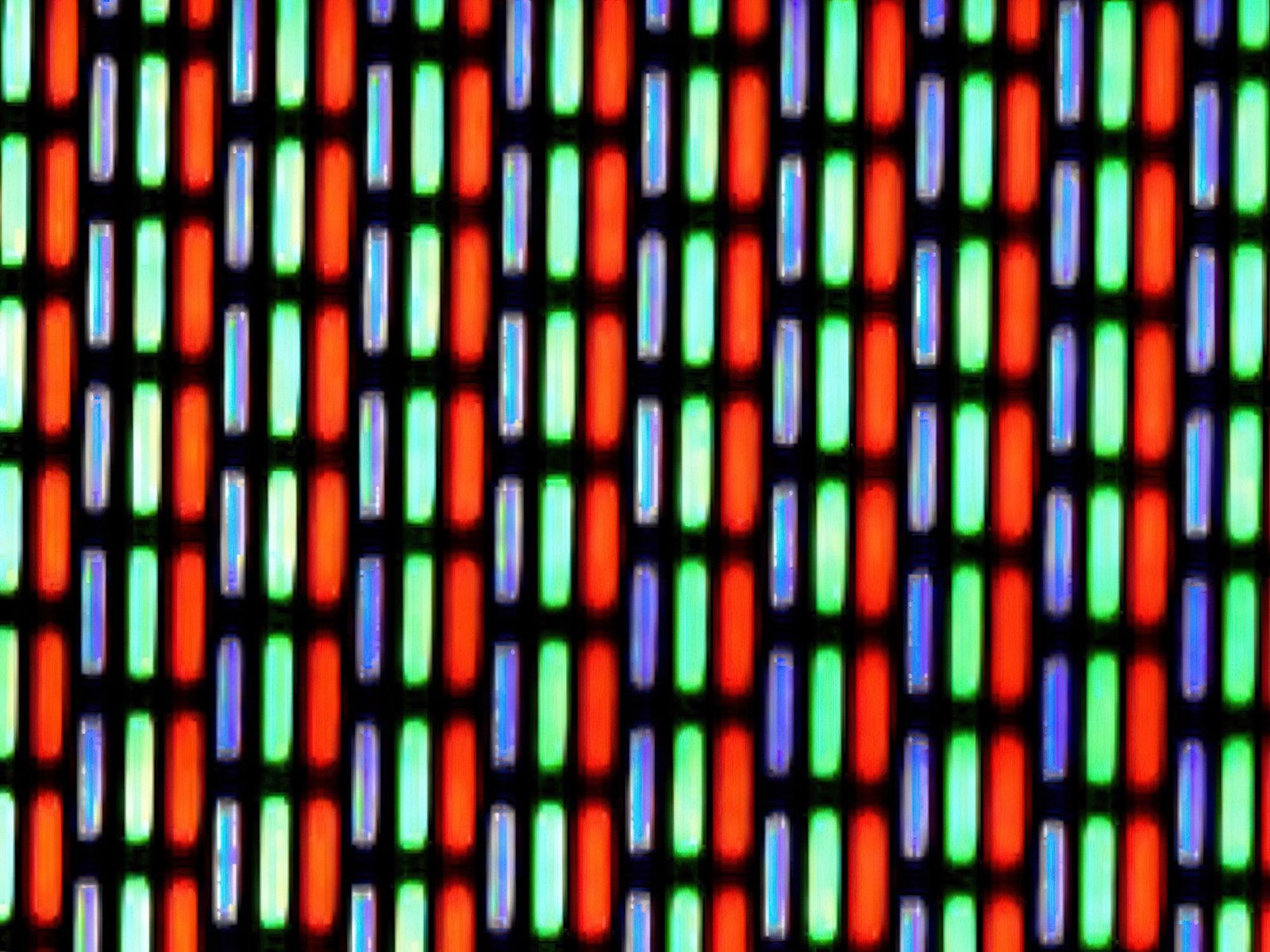
LCD displays (watches, calculators, TV screens) — an electric field twists/untwists the nematic alignment, switching light on and off.
Thermometers and mood rings — cholesteric liquid crystals change colour with temperature because the helical pitch changes.
Kevlar fibre — spun from a liquid-crystal solution, giving extraordinary strength.
Memory trick:Nematic = No layers (only direction) · Smectic = Sheets (layers) · Cholesteric = Corkscrew (helical twist). The order of increasing order is: isotropic liquid < nematic < smectic < crystal.
✎ PYQ Zone — Chapter 8
No directly relevant previous-year questions were found in the papers we scanned (2018–2025) for dielectrics and liquid crystals. The closest questions are listed below as bonus material, and the chapter's core theory is exam-standard.
2022B.Sc. CC-92 marksborderline
Q1(f) — “What is Clathrate compound? Give its example.” ⭐⭐⭐
Related: 2019 · B.Sc. CC-9 · Q2(a)(ii) (1 mark): “What type of bonding is present between xenon and water in xenon clathrate?” — no chemical bond at all; the Xe atom is held only by weak van der Waals (dispersion) forces inside the water cage.
📖 Detailed answer ▼
Clathrate compounds (cage compounds) are solids in which guest molecules are trapped inside cages built by a host lattice. There is no chemical bond between host and guest — only weak van der Waals forces — and the composition is usually non-stoichiometric.
Examples:
Gas hydrates: methane trapped in ice cages — CH₄·5.75H₂O, the famous “burning ice” (a potential fuel reserve); also chlorine hydrate and xenon hydrate.
Quinol clathrates: Ar, Kr or other small molecules trapped in cages of β-quinol.
The guest can escape only if the host cage breaks down — that is why clathrates are also called inclusion compounds.
2019B.Sc. CC-94 marks🔁 also 2023
Q3(c)(i) — “Outline the principle of zone refining. Which metals are purified by it?” ⭐⭐⭐⭐
Repeated: 2023 · B.Sc. CC-9 · Q1(h) (2 marks): “What do you mean by Zone-refining?”
📖 Detailed answer ▼
Principle — fractional crystallisation in a moving zone. An impurity distributes itself between the solid and the melt according to the segregation (distribution) coefficient
k = Csolid / Cliquid
For most impurities k < 1, i.e. the impurity is more soluble in the melt than in the solid. A narrow molten zone (made with a ring heater) is moved slowly along a rod of the impure solid: pure solid crystallises out behind the zone, while impurities stay dissolved in the melt and travel with the zone to one end of the rod. Repeating the pass multiplies the purification; the impurity-rich end is finally cut off.
Metals purified: chiefly silicon and germanium for semiconductors (impurity below 1 part per billion), also gallium and indium. (W. G. Pfann, Bell Labs, 1952.)
One line: k < 1 impurities ride the moving melt zone to the end — ultra-pure Si/Ge for chips.