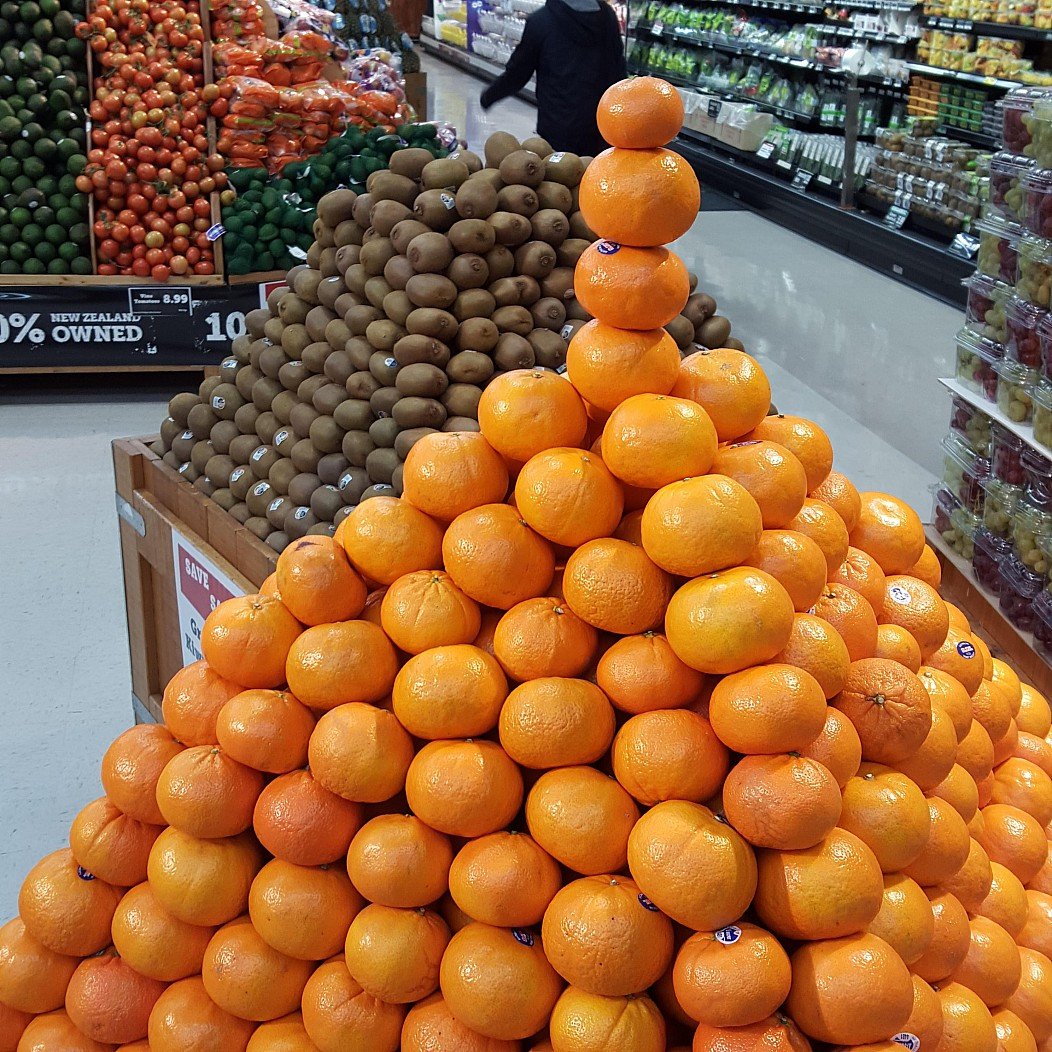
How do equal spheres pack most tightly — and what empty spaces (voids) are left behind? This chapter covers hcp and ccp, tetrahedral and octahedral voids, and the radius-ratio rules that decide crystal structures. Extremely scoring chapter — read carefully.
Imagine packing identical hard spheres (like oranges) so that the empty space is minimum.
One dimension: spheres are placed in a row, each touching two neighbours. Coordination number = 2.
Two dimensions — square packing (AAA type): rows are placed one above the other so that spheres sit directly on top of each other. Less efficient.
Two dimensions — hexagonal packing (ABAB type): the second row sits in the depressions (hollows) of the first row. This is the closest packing in two dimensions — each sphere touches 6 neighbours in the plane.
Remember: In the hexagonal layer, there are two kinds of triangular hollows — one pointing up (△) and one pointing down (▽). These hollows decide where the next layer can sit.
Packing Spheres in Two Dimensions
In hexagonal packing each row sits in the hollows of the row below, leaving small triangular gaps — this is the closest possible 2D packing.
🥞
Close Packing in 3D: hcp vs ccp
Now we stack the 2D hexagonal layers. Call the first layer A. The second layer B sits in half the triangular hollows of A.
hcp — hexagonal close packing (ABAB… type): the third layer goes exactly above the first layer A. The repeating pattern is A-B-A-B…. The unit cell is hexagonal. Examples: Mg, Zn, Ti.
ccp — cubic close packing (ABCABC… type): the third layer sits in the other set of hollows, making a new position C. The repeating pattern is A-B-C-A-B-C…. The unit cell is face-centred cubic (fcc). Examples: Cu, Ag, Au, NaCl (arrangement of ions).
💡 Key fact: ccp and fcc are the same arrangement — ccp describes the stacking (ABCABC), fcc describes the unit cell. In both hcp and ccp, each sphere touches 12 neighbours (coordination number 12) and both have the same packing efficiency, 74%.
Feature
hcp (ABAB…)
ccp (ABCABC…)
Stacking sequence
A-B-A-B…
A-B-C-A-B-C…
Unit cell
Hexagonal
Face-centred cubic (fcc)
Coordination number
12
12
Packing efficiency
74%
74%
Examples
Mg, Zn, Ti, Be
Cu, Ag, Au, Pb
Exam tip: A classic 3-mark question: "Distinguish between hcp and ccp." Draw the two stacking sequences (ABAB vs ABCABC) and add the table above. The diagram alone can fetch half the marks.
Stacking Close-Packed Layers: hcp vs ccp
hcp repeats every two layers (ABAB…); ccp uses three distinct positions before repeating (ABCABC…) — ccp is the same as fcc.
📐
Packing Efficiency of ccp (74%)
Packing efficiency = (volume occupied by spheres in the unit cell ÷ total volume of the unit cell) × 100.
For ccp (fcc unit cell), the atoms touch along the face diagonal:
So in close packing, 74% of space is filled and 26% is empty. This empty space forms the voids (holes) where smaller atoms or ions can fit — this is how compounds like NaCl get their structures.
In fcc the atoms touch along the face diagonal, so the diagonal equals 4 atomic radii = a√2.
🕳️
Tetrahedral and Octahedral Voids
The empty spaces left between packed spheres are called interstitial voids (holes). Two types matter:
Tetrahedral void: the hole surrounded by 4 spheres sitting at the corners of a tetrahedron. There are 2 tetrahedral voids per sphere (atom). The biggest sphere that fits has radius rvoid = 0.225 R (where R = radius of the packed spheres).
Octahedral void: the hole surrounded by 6 spheres sitting at the corners of an octahedron. There is 1 octahedral void per sphere (atom). The biggest sphere that fits has radius rvoid = 0.414 R.
Where are the voids in an fcc (ccp) unit cell?
An fcc unit cell has 4 atoms → 8 tetrahedral voids (2 × 4) and 4 octahedral voids (1 × 4).
Octahedral voids: 1 at the body centre + 12 at edge centres (each shared by 4 cells) = 1 + 12 × 1/4 = 4.
Tetrahedral voids: all 8 lie inside the body of the unit cell → 8.
Void type
Surrounding spheres
Voids per atom
Voids per fcc unit cell
Void radius
Tetrahedral
4
2
8
0.225 R
Octahedral
6
1
4
0.414 R
One-line derivation idea (octahedral, 0.414): In an octahedral void the six anions touch along the edge of the square; geometry gives R + r = √2·R, so r/R = √2 − 1 = 0.414. Similarly the tetrahedral void gives √(3/2) − 1 = 0.225.
Exam tip:"How many tetrahedral and octahedral voids are present in an fcc unit cell?" — answer 8 and 4, and always show the counting (2 × 4 = 8; body centre 1 + edge centres 12 × 1/4 = 4).
Tetrahedral and Octahedral Voids
A tetrahedral void (4 spheres) fits a sphere of radius 0.225R; an octahedral void (6 spheres) fits 0.414R. These decide which cations fit where.
📏
Radius-Ratio Rules
In ionic crystals, the radius ratio r+/r− (cation radius ÷ anion radius) decides the coordination number of the cation — i.e., how many anions can fit around it, and hence the geometry.
Radius ratio (r+/r−)
Coordination number
Geometry
Example
below 0.155
2
Linear
—
0.155 – 0.225
3
Triangular planar
Boron in borates (BO33−)
0.225 – 0.414
4
Tetrahedral
ZnS, SiO44− in silicates
0.414 – 0.732
6
Octahedral
NaCl, MgO
0.732 – 1.0
8
Cubic (body-centred)
CsCl
The limiting radius ratio is the minimum r+/r− at which the cation just touches all the surrounding anions. For octahedral coordination it is 0.414 (same geometry as the octahedral void!); for tetrahedral it is 0.225.
If the ratio is smaller than the limiting value, the anions touch each other but not the cation — the structure becomes unstable and shifts to a lower coordination number.
💡 Memory trick: Read the boundary numbers as a chain: 0.155 → 0.225 → 0.414 → 0.732 → 1.0, with coordination numbers 2 → 3 → 4 → 6 → 8. Notice 0.225 and 0.414 are the same numbers as the tetrahedral and octahedral void radii — one table, two uses!
Exam tip: Radius-ratio numericals are fixed-pattern: calculate r+/r− from given ionic radii, then read the coordination number and predicted structure (NaCl-type or CsCl-type) from the table. Always state the range your value falls in.
Radius Ratio Decides Coordination Geometry
As the cation grows relative to the anion, more anions fit around it: triangular (CN 3) → tetrahedral (CN 4) → octahedral (CN 6) → cubic (CN 8).
✎ PYQ Zone — Chapter 2
Every previous-year question from this chapter's topics, with year, paper, marks and a full exam-ready answer. Tap a question to open its detailed solution.
2023B.Sc. DSE-12 marks
Q1(b) — “Mention two differences between tetrahedral void and octahedral void.” ⭐⭐⭐
📖 Detailed answer ▼
Point
Tetrahedral void
Octahedral void
Surrounding spheres
4 (at tetrahedron corners)
6 (at octahedron corners)
Limiting radius ratio
rvoid/R = 0.225
rvoid/R = 0.414
Number per sphere
2 per atom
1 per atom
Size
Smaller
Larger
Position in fcc cell
All 8 lie inside the body (8 per cell)
1 at body centre + 12 at edge centres (4 per cell)
Use in compounds: the bigger cation goes into the bigger (octahedral) void when possible. Example — in NaCl, Cl⁻ ions form ccp and the smaller Na⁺ ions occupy all the octahedral voids (formula XY); in zinc blende (ZnS), S²⁻ forms ccp and Zn²⁺ occupies half the tetrahedral voids (formula XY). (Any two differences earn full marks.)
2021B.Sc. DSE-15 marks
Q2 — “What is the key difference between hcp and ccp structures? Suppose X atoms form a close packed lattice structure, where Y atoms (smaller than X atoms) have to be incorporated without disturbing the close-packed lattice. Write down the formula of the compounds with proper justification when (i) Y atoms are occupied in all tetrahedral voids; (ii) Y atoms are occupied in half of the tetrahedral voids; (iii) Y atoms are occupied in all the octahedral voids; and (iv) Y atoms are occupied in half of the octahedral voids. Mention the limiting radius in each case of Y atoms in regard to that of X atoms, so that Y atoms fit perfectly either in tetrahedral voids or in octahedral voids.” ⭐⭐⭐
📖 Detailed answer ▼
Key difference — the stacking sequence. Both hcp and ccp are close packings of identical spheres: every sphere touches 12 neighbours (coordination number 12) and both fill 74% of space. They differ only in how the hexagonal layers repeat:
hcp (hexagonal close packing): layers repeat as ABAB… — the third layer sits exactly above the first. The unit cell is hexagonal. Examples: Mg, Zn, Ti, Be.
ccp (cubic close packing): layers repeat as ABCABC… — the third layer occupies the second set of hollows, a new position C. The unit cell is face-centred cubic (fcc) — ccp and fcc are the same arrangement. Examples: Cu, Ag, Au, Pb.
Void counting. Close packing always leaves two kinds of holes. For N atoms of X there are 2N tetrahedral voids and N octahedral voids (check with one fcc unit cell: 4 atoms → 8 tetrahedral + 4 octahedral ✓).
Formulas when Y occupies the voids (Y must be small enough to fit without pushing X apart):
Case
Y atoms present
X : Y ratio
Formula
Real example
(i) all tetrahedral voids
2N
1 : 2
XY2
CaF2 (fluorite)
(ii) half the tetrahedral voids
N
1 : 1
XY
ZnS (zinc blende)
(iii) all octahedral voids
N
1 : 1
XY
NaCl
(iv) half the octahedral voids
N/2
2 : 1
X2Y
CdCl2
Limiting radius ratios — the largest Y that fits exactly in the void, touching all surrounding X atoms:
If Y is smaller than this it rattles in the hole; if bigger, it pushes the X lattice apart (which the question forbids). So the void type chosen must satisfy rY/rX ≥ the limiting value of that void.
Exam tip: write the void-counting line first (N X → 2N Td + N Oh) — it justifies every formula in one step. Then quote the real examples (NaCl, ZnS, CaF2, CdCl2); examiners reward them.
2018B.Sc. CC-62 marks
Q3(d)(iv) — “Calculate the packing efficiency of fcc lattice.” ⭐⭐⭐
📖 Detailed answer ▼
Step 1 — atoms per unit cell. fcc has atoms at 8 corners (× ⅛) and 6 face centres (× ½): Z = 8 × ⅛ + 6 × ½ = 4 atoms per unit cell.
Step 2 — relation between edge length a and radius r. In fcc the atoms touch along the face diagonal: face diagonal = 4r = √2·a, so a = 2√2·r.
Packing efficiency of fcc = 74% — the maximum possible for equal spheres, so 26% of the cell is void space. This is why fcc is called a close packing (compare: bcc 68%, simple cubic 52%).
2023B.Sc. DSE-13 marks
Q2(b)(i) — “Calculate the percentage of space occupied in an atomic BCC lattice.” ⭐⭐⭐
📖 Detailed answer ▼
Step 1 — atoms per unit cell. bcc has atoms at 8 corners (× ⅛) and 1 at the body centre: Z = 8 × ⅛ + 1 = 2 atoms per unit cell.
Step 2 — relation between edge length a and radius r. In bcc the atoms touch along the body diagonal: body diagonal = 4r = √3·a, so a = 4r/√3.
68% of space is occupied in a bcc lattice (32% empty). It is less dense than fcc (74%) because each atom has only 8 neighbours instead of 12 — the packing is looser. Memory chain for the exam: simple cubic 52% → bcc 68% → fcc 74%.
2022B.Sc. CC-65 marks🔁 also 2018
Q2(b) — “What do you mean by radius ratio principle? What information can be obtained from it? Find out the limiting radius ratio for tetrahedral and cubic coordination.” ⭐⭐⭐⭐
Repeated theme: 2018 · B.Sc. CC-6 · Q3(a)(i) · 5 marks (“State the basis of 'radius ratio rule' for ionic compounds. What information can be obtained from it? Mention any two limitations of radius ratio rule.”)
Mark split in 2022 paper: 1 (principle) + 1 (information) + (1½ + 1½) (the two limiting-ratio derivations).
📖 Detailed answer ▼
Radius ratio principle: in an ionic crystal the ratio r⁺/r⁻ (cation radius ÷ anion radius) decides how many anions can pack around each cation — i.e. the coordination number of the cation, and hence the geometry of the crystal. A small cation fits into a small hole (low coordination); a bigger cation needs a bigger hole (higher coordination).
Information obtained from it:
Coordination number of the cation (3, 4, 6 or 8).
Geometry of the site occupied — triangular, tetrahedral, octahedral or cubic.
Prediction of structure type — e.g. whether an MX salt adopts the ZnS (tetrahedral), NaCl (octahedral) or CsCl (cubic) structure.
Limiting radius ratio = the value of r⁺/r⁻ at which the cation just touches all surrounding anions while the anions also just touch each other. Below this value the anions would touch each other but not the cation, and the structure collapses to a lower coordination number.
Derivation 1 — tetrahedral coordination (C.N. = 4): put the cation at the centre of a regular tetrahedron with anions at the four vertices. If each anion has radius r⁻, the edge of the tetrahedron (anion–anion contact) is 2r⁻. Geometry of a regular tetrahedron: centre-to-vertex distance = (edge × √6)/4 = 2r⁻ × √6/4 = r⁻√6/2 ≈ 1.2247·r⁻. But this distance is also r⁺ + r⁻, so
r⁺ + r⁻ = 1.2247·r⁻ ⇒ r⁺/r⁻ = 1.2247 − 1 = 0.225
Derivation 2 — cubic coordination (C.N. = 8): put the cation at the body centre of a cube with anions at the eight corners. Anions touch along each cube edge, so edge length a = 2r⁻. The body diagonal = √3·a = 2√3·r⁻, and it equals 2(r⁺ + r⁻) (cation touching the two corner anions). So
(For reference, the octahedral limiting value between them is √2 − 1 = 0.414.)
Two limitations (asked in 2018):
Hard-sphere assumption: ions are treated as rigid, non-polarizable spheres, but real ions deform — when the anion is polarized by the cation (Fajans' rules) the bonding gains covalent character and the rule breaks down. Classic failure: the radius ratio of ZnS ≈ 0.40 predicts octahedral (NaCl-type) coordination, but ZnS is actually tetrahedral because the Zn–S bond is significantly covalent.
Radii are not fixed: ionic radius itself changes with coordination number, and the rule ignores this; it also cannot handle non-spherical ions or structures decided by directional covalent bonding.
Table to memorise: 0.155–0.225 → C.N. 3 (triangular); 0.225–0.414 → C.N. 4 (tetrahedral); 0.414–0.732 → C.N. 6 (octahedral); 0.732–1.0 → C.N. 8 (cubic). The boundary numbers are the limiting ratios you just derived.